Squad Number Conventions and Superstitions by Sport
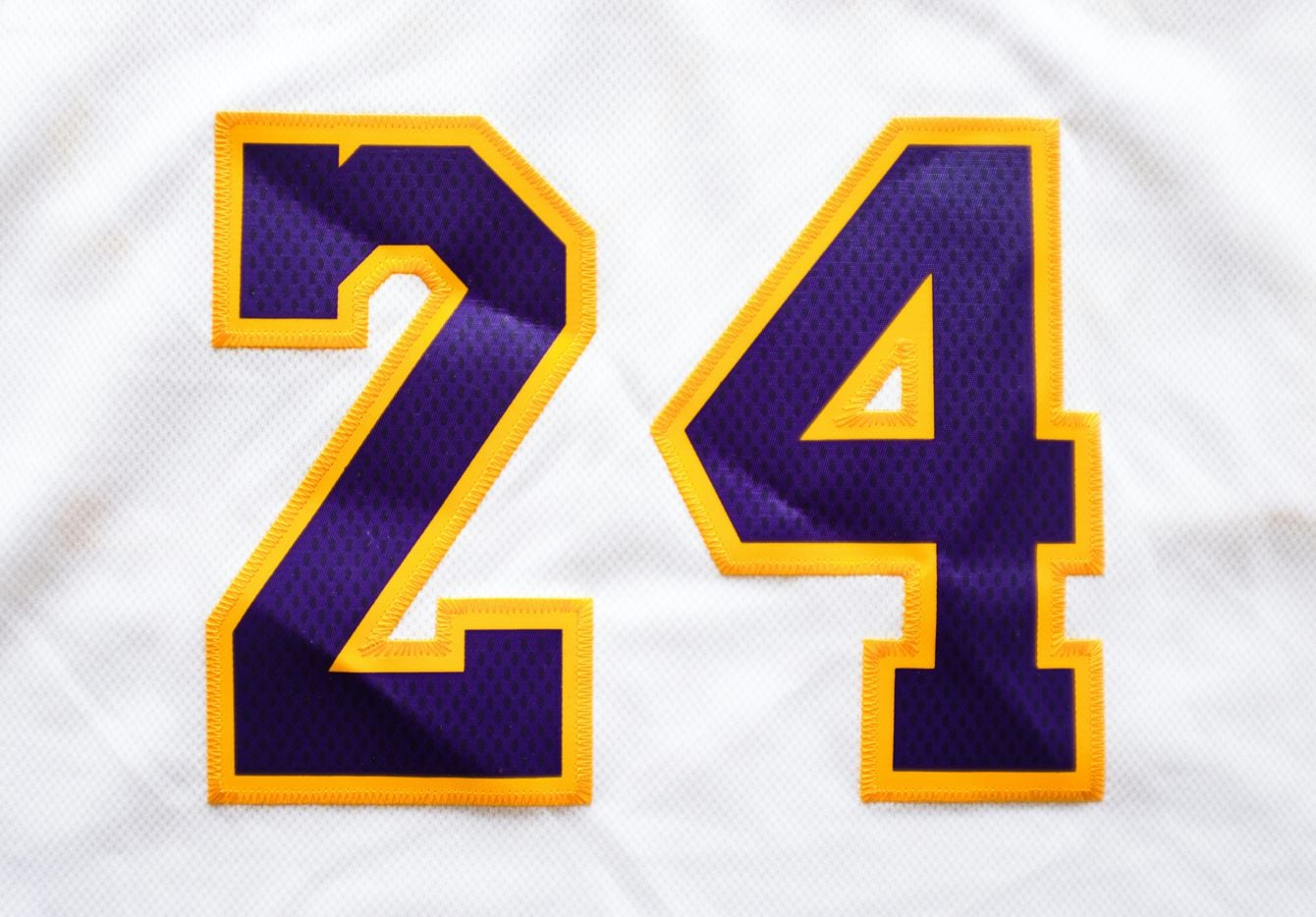
The number on the back of your shirt is not always just a squad number, not a digit (or two) embroidered on polyester; it represents so much more than that. Conventions traditionally signal roles by the number you wear, but sports culture assigns it a meaning that goes beyond practicalities.
Each sport does it differently. In basketball, 23 is Air Jordan, the GOAT. Wear 23 in soccer, and it usually means you’re at the end of the bench. On one hand, a squad number is a job description; on the other, it's pure superstition.
Cycling: Numbering as Paperwork
In cycling, a number’s ownership is not assigned to a rider, but to the race. It’s reassigned every time based on the team hierarchy at the start of an individual race. This is why custom cycling apparel never comes with a number printed on it. The bib gets pinned on race morning and comes off the same evening.
This means that an individual rider can go through their entire career without wearing the same number twice. Each team gets a block of numbers, leader first, with the 1 reserved for the defending champion. The mythology attaches to the number, not the rider.
Every cycling fan will therefore know the meaning of the number 51, which is the Tour de France’s so-called “lucky” bib, the one that has led several riders to the top of the cycling world.
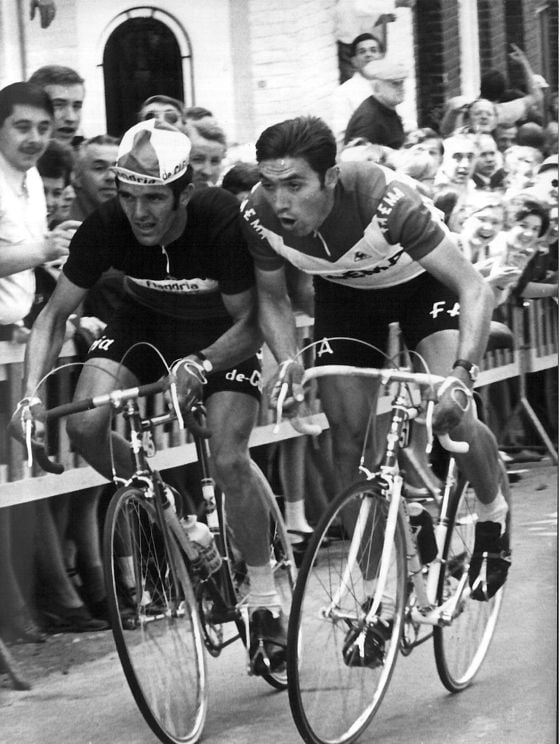
It goes back to before cyclists were even wearing custom high-end jerseys in technical fabrics, but the heavy cotton varieties. Yes, it goes that far back. First, it was Eddy Merckx, who won everything worth winning on his debut Tour in 1969 with 51 pinned to his back. Three more followed inside a decade: Luis Ocaña in 1973, Bernard Thévenet in 1975 and Bernard Hinault in 1978. The French even gave the bib a name, the dossard anisé, after the aniseed aperitif Pernod launched in 1951.
This peculiarity means that numbers don’t hold the same meaning in other sports, but not a single rider wants to go for the bare digit 13. Often, riders insist on wearing it upside down, and it sometimes even gets to the point organizers want the number scrapped from the draw.
Soccer/Soccer: Positions, Maestros, and Clockwork Orange
In soccer, or soccer, numbers signal positions, mapping players straight onto the classic pyramid formation. If you’re a number 1, you’re a goalkeeper. That’s still the case today. 2 and 3? Those are the full backs, right and left. The center back pairing is 5 and 6 if you grew up on English soccer, 4 and 5 if you grew up on Italian or Spanish. The number 9, they’re up top, responsible for the goals.
Then there’s the number 10. Oh yes, the number 10. It’s a number with weight, the historical moments of soccer embedded into the fabric, whether you’re playing in a World Cup or making your own custom soccer jersey for a Sunday League match: Maradona, Pelé, Bergkamp, Baggio, Platini, and now, the GOAT, Messi.
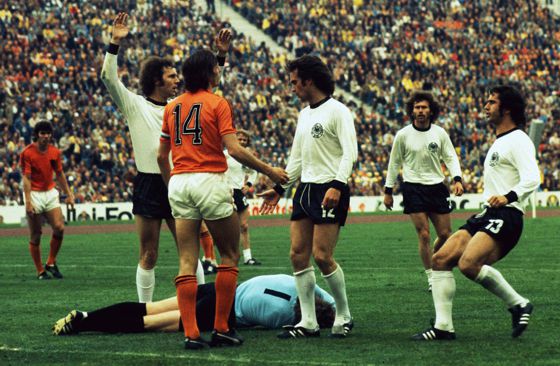
The traditional positional system was perhaps first properly challenged by the Dutch in 1974, the ‘Clockwork Orange’, led by Johan Cruyff. The Dutch have always blended artistry with a strange practicality, numbering their players alphabetically (with their star captain as the lone exception to keep his usual squad number), resulting in a keeper donning the number 8, and Ruud Geels the number 1 shirt.
But of course, the number 14 will always be tied to Johan Cruyff. Just like the number 10 carries Maradona, and why it weighed so heavily on even Messi, until he managed to win it all with Argentina.
Volleyball: Positional Logic Still Doing Regulatory Work
In volleyball, numbers matter a little bit less for identifying unique roles. Take the libero: by the rules of the game, they must wear a jersey that visually stands out. Because of how fast-paced the sport is, a referee needs to spot them instantly, and a simple squad number isn't enough. Only a completely contrasting color will do.
Similarly, the captain isn't tied to a specific number, but is instead identified by a stripe printed directly underneath the number on their jersey (a bit like soccer's armband). The status is not in the number itself, but in the player’s role.
FIVB numbers jerseys from 1 to 20, with the range only extended at senior world competitions where squads run larger. When you buy a volleyball jersey, you focus more on the custom jersey design rather than the number. This limits the superstitions that can be built around a single jersey, although volleyball certainly has its own numerical idiosyncrasies.
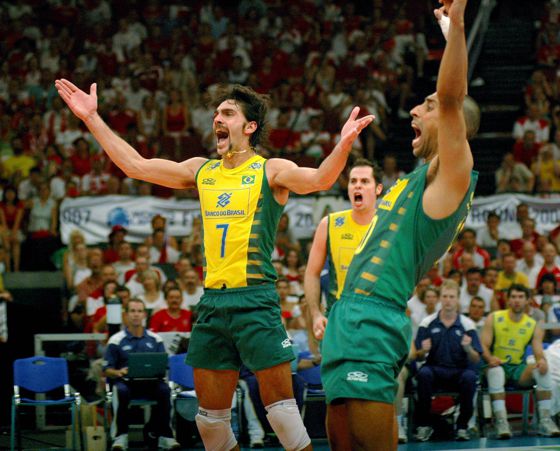
If you want to talk about individuals, Brazil's Giba wore what is probably the most recognizable number in the sport. His 7 took Olympic gold in Athens and three World Championships, cementing the jersey's legacy.
Handball: Positions First, Narrative Second
In handball, numbers lean positional, and as in volleyball, visibility matters more than the deeper meaning of what you wear on your back.
The goalie has to be entirely distinct visually, even more so than in a sport like soccer, for example, because of the speed of the game and the near-instant movement from one end of the court to the other.
There is a positional convention that most coaches still teach, though it lives in training diagrams more than on match day jerseys. The Number 1 tends to always be the goalkeeper, and the left and right backs will have the 3 and 6 jerseys. The number 4 is the center back, the creative strategist who runs the attack. The left and right wings take 2 and 7. And perhaps strangely to novices of the sport, the number 5, the pivot, spends the whole match with his back to goal on the six-meter line, exploiting space and creating opportunities for everyone but himself.
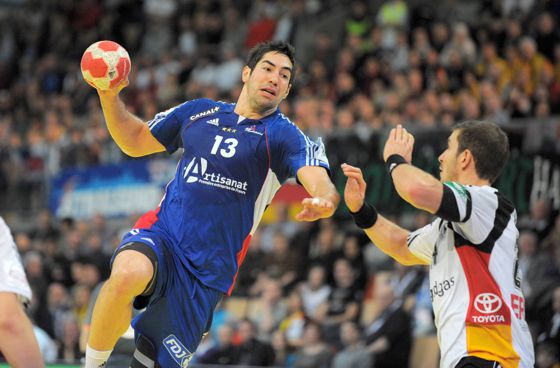
Yet the rules do make it easier to create individuality, especially compared to volleyball, with anything from 1 to 99 available on a custom handball jersey. There are notable players, like Nikola Karabatić of France, who changed the meaning of the number 13. It fit his personality as a player, an unashamed confidence in his play. An elite tactician, he was someone with enough garra, as the Latin Americans would say, to counter the superstition surrounding the ‘unlucky’ number.
Ice Hockey: Your Number, Your Identity
With ice hockey, we move to the other end of the spectrum. Numbers really do matter; often players will choose one and stick with it until their careers end.
Because hockey players have full flexibility with their jersey numbers, you will find almost every legendary player has a near-monopoly on the digits on the back of his shirt.
66 belongs entirely to Le Magnifique, Mario Lemieux. And 99? You’re not a hockey fan if you don’t recognize it belongs to The Great One, Wayne Gretzky himself. And there’s everything in between, too, with Sports Illustrated devoting an article to the best 00-99 ever to hit the ice, with a proper big player for each jersey number. Hey, if you decide to put on a custom hockey jersey when you’re next on the ice, it may create its own legend.

And just to highlight the importance of superstition in hockey: not a single New Jersey Devil wore the number 13 until 2015. It was not that players refused it. Original owner John McMullen thought the number was cursed and simply never issued it, and general manager Lou Lamoriello kept the tradition alive for decades. Mike Cammalleri, who had worn 13 since he was seven, signed in New Jersey and found 23 hanging in his stall instead. He only got his number back once Lamoriello left for Toronto.
Basketball: From Fouls with Fingers to Air Jordan
The biggest change happened in basketball. It used to be a rigid sport. From the 1957-58 season, the NCAA banned any digit above 5, a rule that stood until it was finally scrapped for 2023-24. The idea was to enable referees to signal fouls with their fingers; superstition or marketing was far from the rule-maker’s mind.
But now, basketball players are known as much for the numbers on their back as for the teams they play for. It follows what the league learned in the 1980s: individuals matter, the stars make the league, they inspire the new generation, and the kid choosing a number for a custom basketball jersey is choosing a lineage.
When you say 23, it’s Michael Jordan. Kobe Bryant's 24 has always carried the theory that he was placing himself one step past Jordan, though Kobe himself pointed to his old high school number and the hours in a day. Number 6, that’s Bill Russell, no frills, nothing crazy. It denotes simplicity, a hard-nosed worker, a leader, a number retired by the NBA.
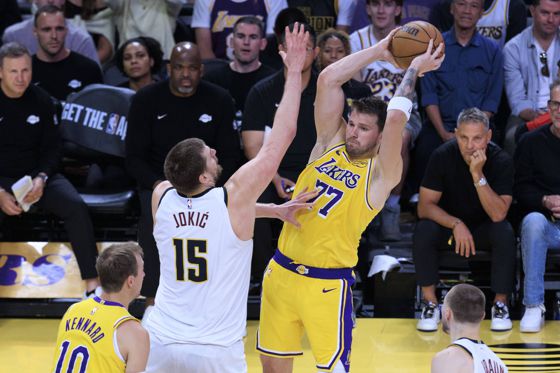
And in today’s NBA, you have 77, Luka, the magician, the Laker-legend-to-be. Victor Wembanyama, with that oozing confidence, there’s a reason he’s picked number 1. Yet still the old dogs rule: Steph Curry’s 30 still tops the best-selling jersey charts.
A Number Only Means What Its Myth Says It Does
Numbers have a practical meaning, of course. At least according to traditional dogma. Yet in some sports, in most, the number now means something much more significant.
But wear that number 10 on a playground, and everyone will instantly think of Messi, Maradona, the midfield maestros that live within every fan who loves soccer. Wear the 77 in Slovenia, and even people in a small middle-of-nowhere village will nod in acknowledgement.
Across six sports, there is commonality, the same rule applies. Numbers are coded, have a deeper meaning, are sometimes even considered sacred to millions of people, but it’s the language of mythology that assigns the definition.
Image credits Title image: Unsplash / Olivier Collet; Image 2: IMAGO / Belga ; Image 3: IMAGO / BSR Agency; Image 4: IMAGO / East News; Image 5: IMAGO / Camera 4; Image 6: IMAGO / TT; Image 7: IMAGO / ZUMA Press Wire